When I released my fitness app SynapseGym, I didn't expect global reach.
I'm an indie developer — not a company. The app wasn't built for growth metrics or investors — it was built because I was frustrated. Most workout apps didn't offer what I wanted, and the ones that came close were simply too expensive. So I decided to build my own.
What I didn't expect was how much language alone would influence the app's success.
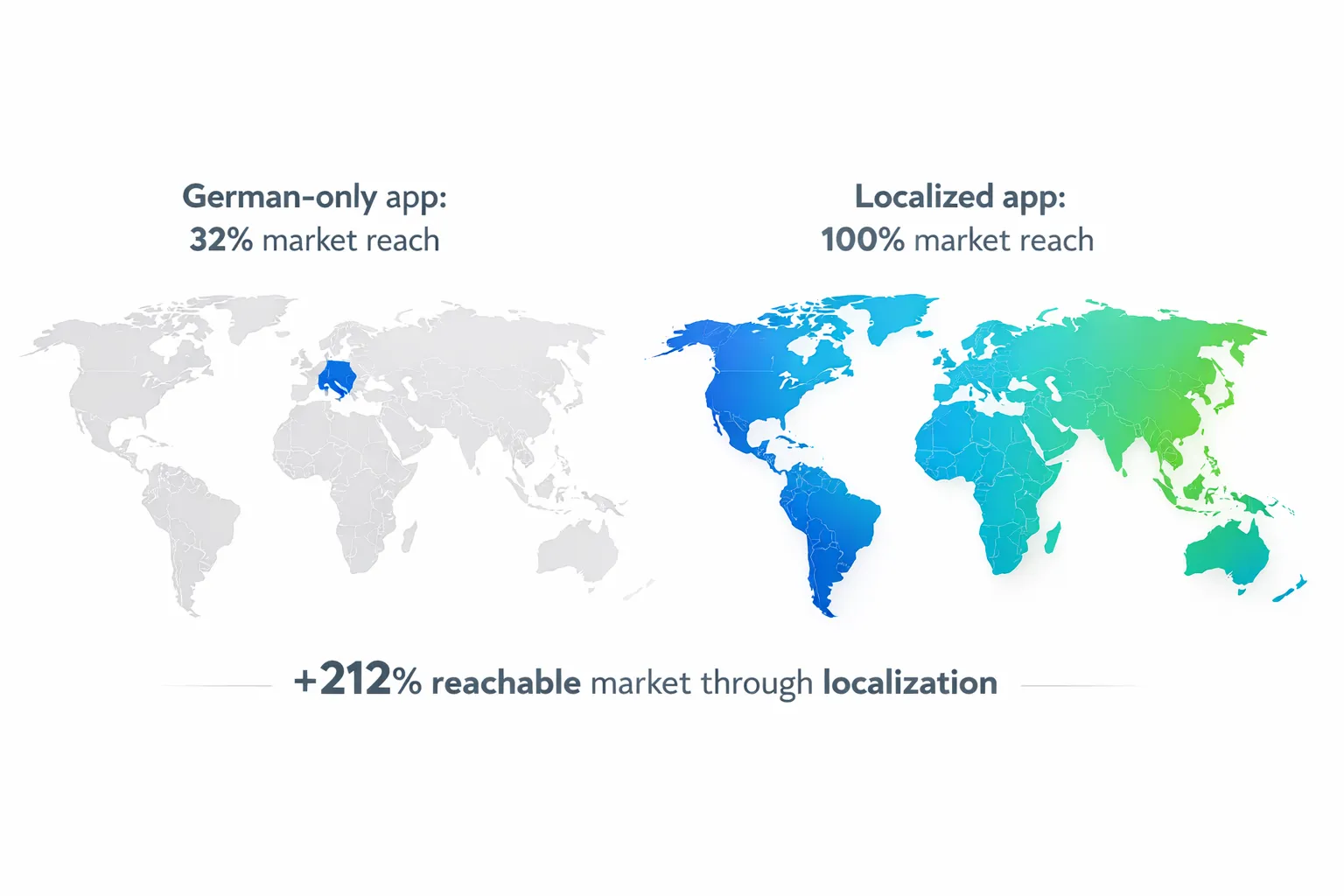
Only 32% of the Market Was German
After launch, I analyzed the geographic distribution of downloads.
The result was eye-opening:
- 32% of all downloads came from Germany
- 68% came from non-German-speaking countries
This means that more than two thirds of all users would not have existed if the app had been available only in German.
Without app translation, SynapseGym would have been limited to roughly one third of its actual market reach.
App Translation Didn't Add Features — It Added Markets
Nothing about the app itself changed:
- Same features
- Same UI
- Same functionality
The only difference was language.
Yet that single change expanded the reachable audience by approximately:
+212% market growth (from 32% reachable → 100% reachable)
Mobile app localization didn't improve the product. It multiplied its visibility.
Where the Additional 68% Came From
After translating the App Store listing, downloads began appearing across the world.
Approximate distribution:
| Region | Share |
|---|---|
| Eastern Europe | ~17% |
| Western Europe | ~15% |
| Asia | ~12% |
| South America | ~9% |
| Middle East & others | ~9% |
| North America | ~6% |
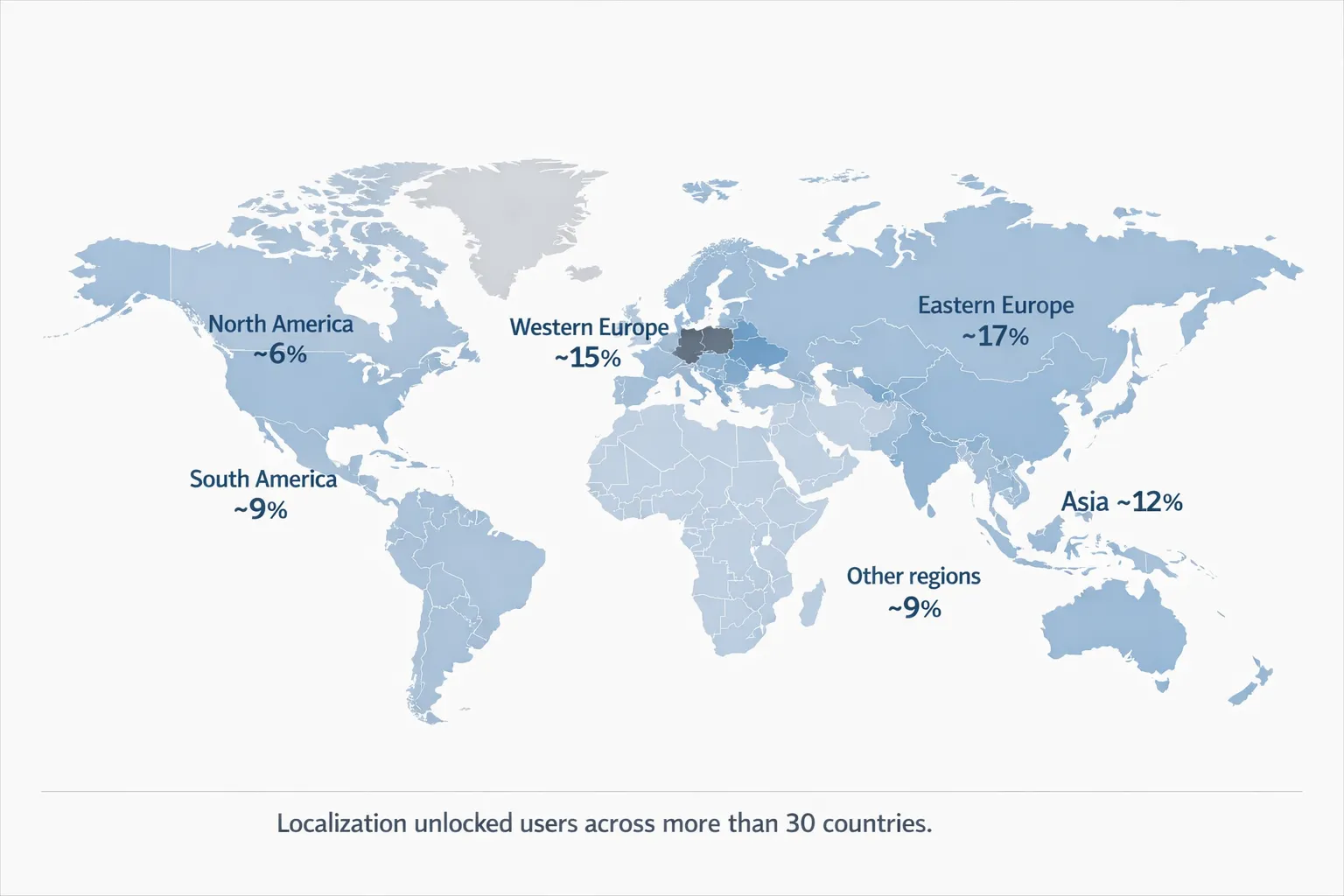
No single country dominated. The growth came from many smaller markets combined — markets that would have been completely inaccessible without localized App Store pages.
Why English Alone Was Not Enough
Even though English is widely understood, the data showed a clear pattern:
- Users strongly prefer installing apps in their native language
- Localized descriptions convert noticeably better
- App Store search visibility depends heavily on localized keywords
In practice: An English-only app is still invisible to large parts of the global market.
For SynapseGym, English alone would still have left more than 40% of potential users unreachable.
The Hidden Power of App Store Localization
App store optimization through localization affects three critical growth metrics:
1. Discoverability
Translated metadata enables:
- Regional keyword rankings
- Country-specific search results
- Exposure in local App Store charts
Without localization, the algorithm simply has nothing to index.
2. Trust
Users are far more likely to install when:
- Descriptions are written in their language
- Screenshots match that language
- Onboarding feels familiar
This effect is especially strong outside English-dominant markets.
3. Conversion Rate
Understanding drives confidence. Confidence drives installs.
Even small localization improvements can increase conversion rates significantly — especially in markets such as Latin America, Eastern Europe, and Asia.
Why Simple AI Translation Isn't Enough
At first, I tried translating my App Store content with ChatGPT.
The text was grammatically correct — but it didn't perform.
Because app store localization is not about language alone. Each market uses different:
- Search terms
- Keyword structures
- Phrasing patterns
- User expectations
A literal translation may read well, yet rank for zero keywords. From an ASO perspective, it simply doesn't exist.
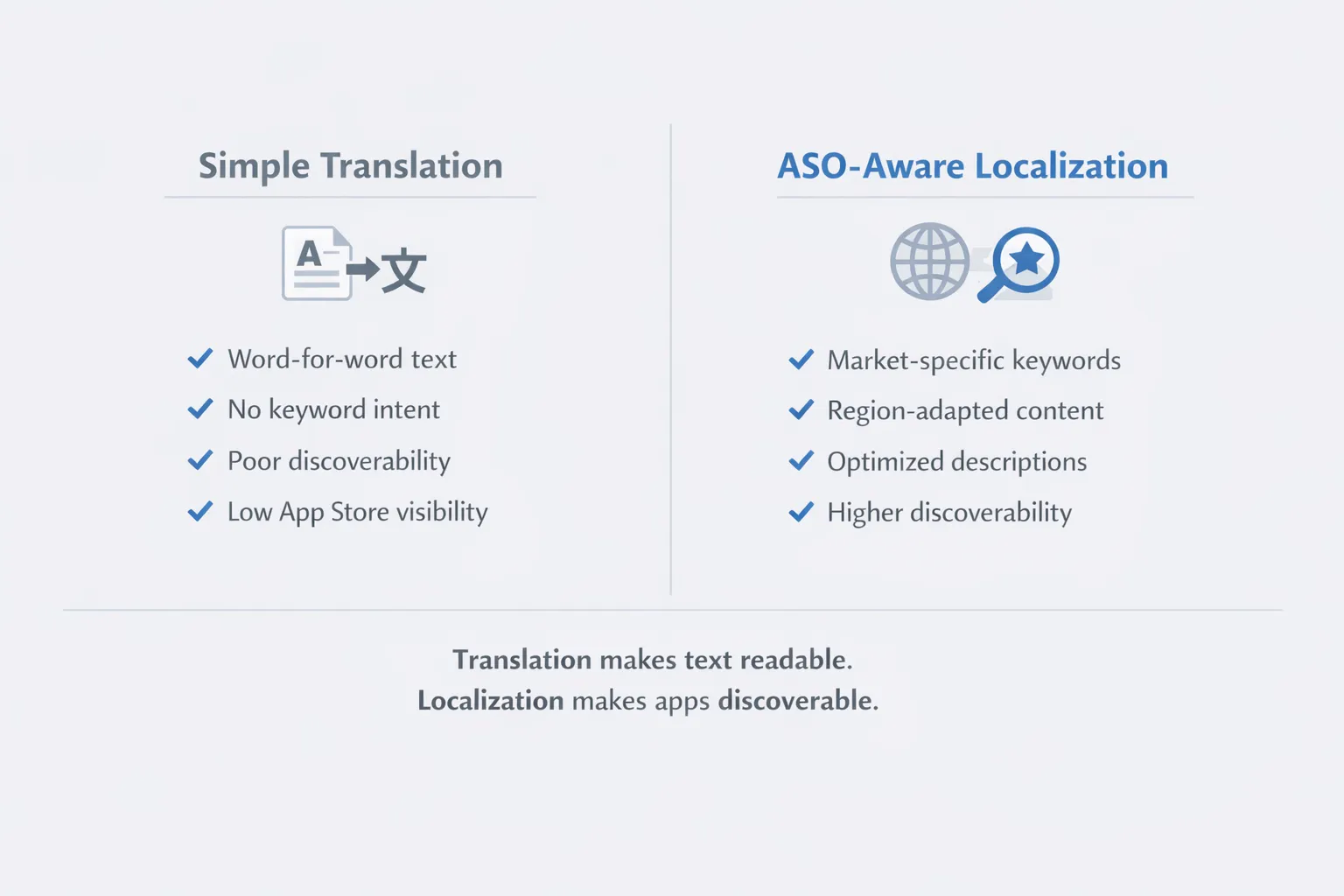
Translation ≠ Localization
ChatGPT translates sentences. But App Store growth depends on:
- Regional keyword intent
- Market-specific wording
- ASO-driven structure
- Discoverability, not readability
That's why translated listings often need completely different content, not just translated content.
What I Built From This Experience
Managing translations manually quickly became unsustainable:
- Dozens of languages
- Different keyword strategies per region
- Inconsistent translation quality
- Constant update overhead
That experience led me to build shipglobal.dev — a service focused on ASO-aware app store localization, not word-for-word translation.
The goal: Help indie developers unlock the missing 60–70% of their market without agency pricing.
What This Taught Me as an Indie Developer
Looking at the data today, the conclusion is clear:
- 32% of downloads came from my home market
- 68% were unlocked purely through translation
- The total reachable audience increased by over 200%
Or in simple terms:
Language was the single most impactful growth decision I made.
Not ads. Not features. Not marketing. Just localization.
Final Thought
App translation isn't about making text readable. It's about making your app discoverable.
Language opens markets — ASO unlocks them.
Building SynapseGym and other products under balane.tech. Both the app and shipglobal.dev were created from real problems I encountered — not from theoretical growth strategies.