— Topic
Thoughts
Longer thoughts that fit no category. Technology, work, and the patterns underneath.
14 articles
Watchful but Unseeing: Saxony-Anhalt and the Sleepwalkers
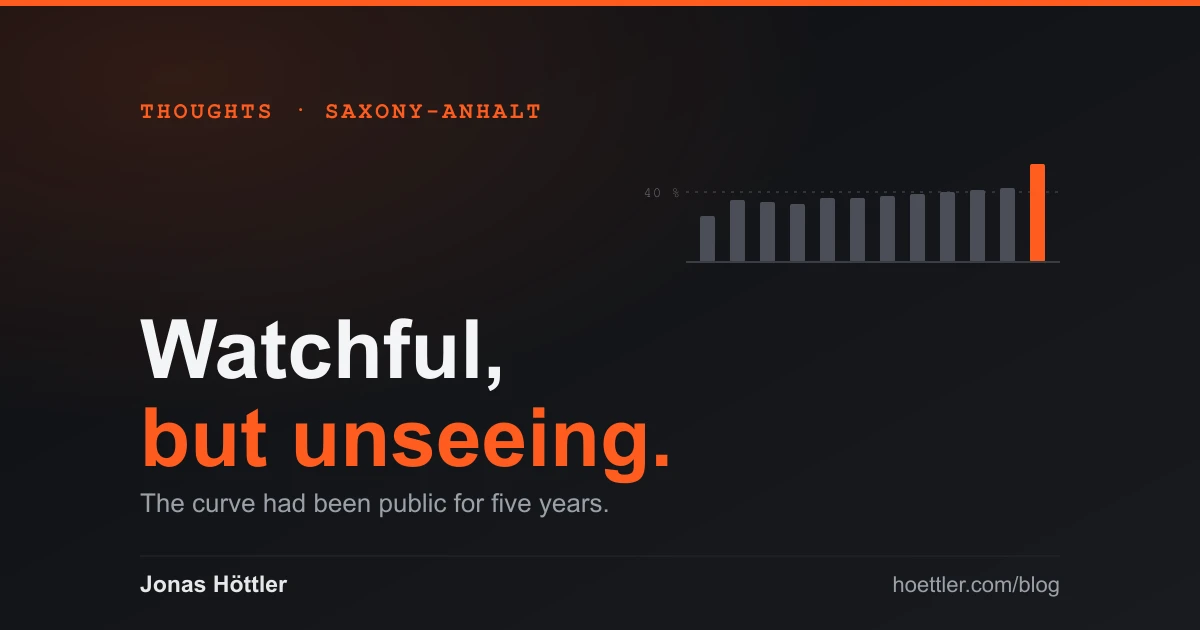
44 percent was not a surprise. The curve has been climbing in public for five years, interrupted twice by a pause everyone mistook for a ceiling. Christopher Clark described how a system walks into catastrophe with its eyes open. His book is about 1914 and reads like the transcript of this election night.
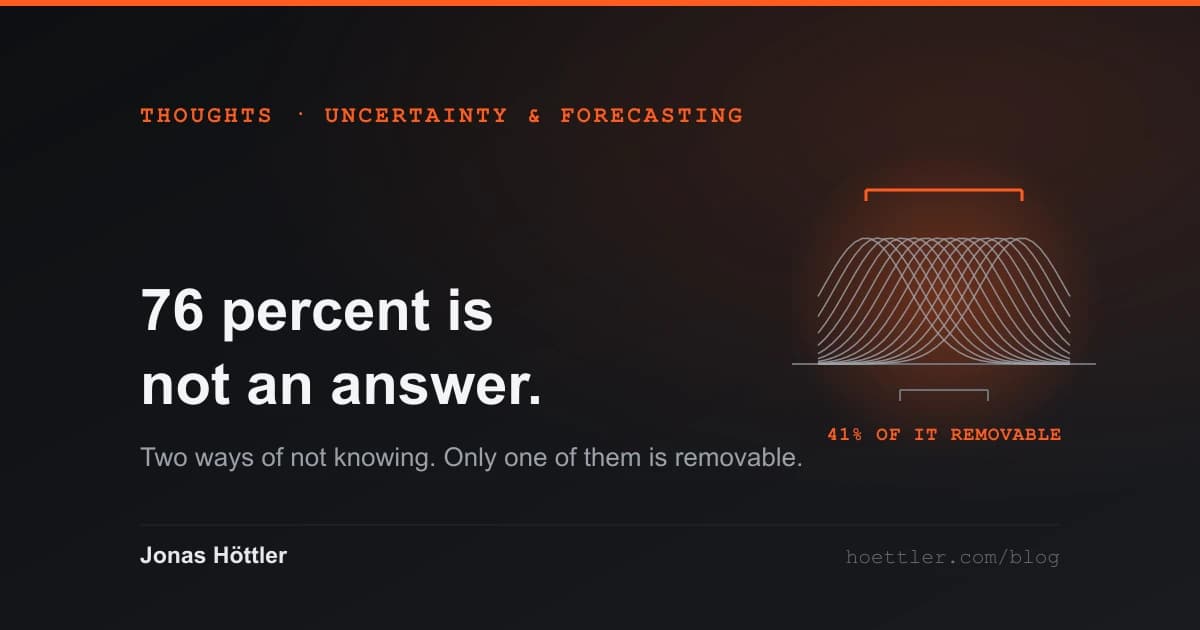
76 Percent Is Not an Answer
A forecast does not owe you the future. It owes you the split of its own ignorance: what the world rolls, you can only price. What you do not know, you can measure. I built a machine that separates the two, and here is what comes out.
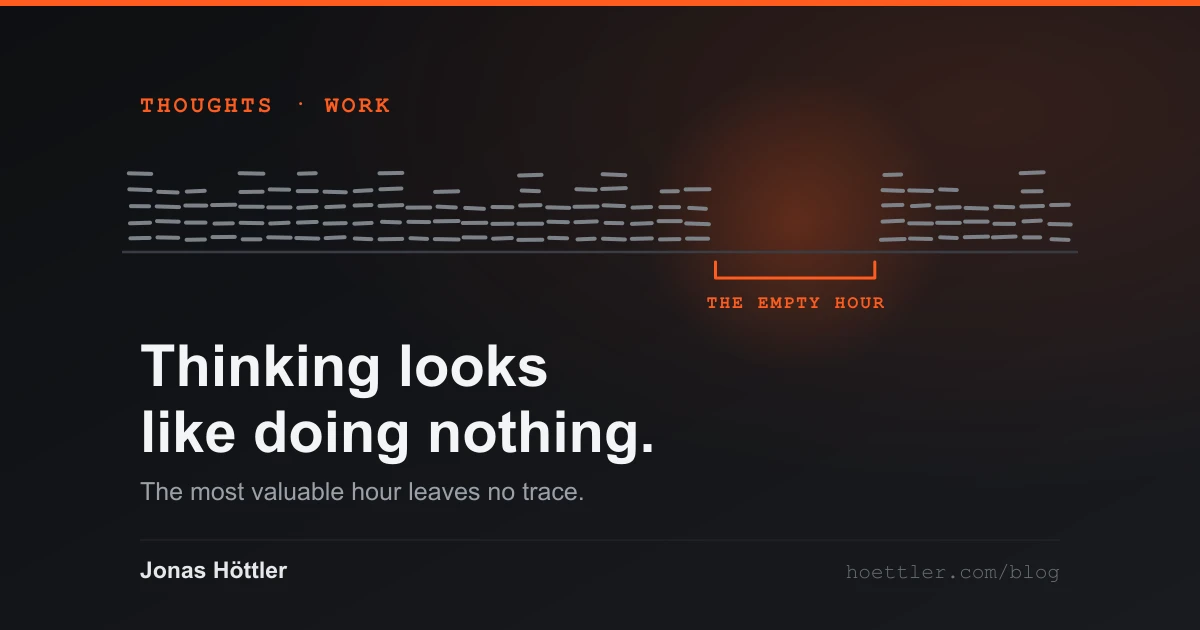
Thinking Looks Like Doing Nothing
Since going independent, the most valuable day of my month is the one on which I cannot be reached. In employment it would never have been approved, and for a sensible reason: from the outside, thinking is indistinguishable from doing nothing. Why organisations optimise away exactly the work that decides whether the rest of the work is worth anything, why reachability is a service to other people's priorities, and what survives a day without signal.
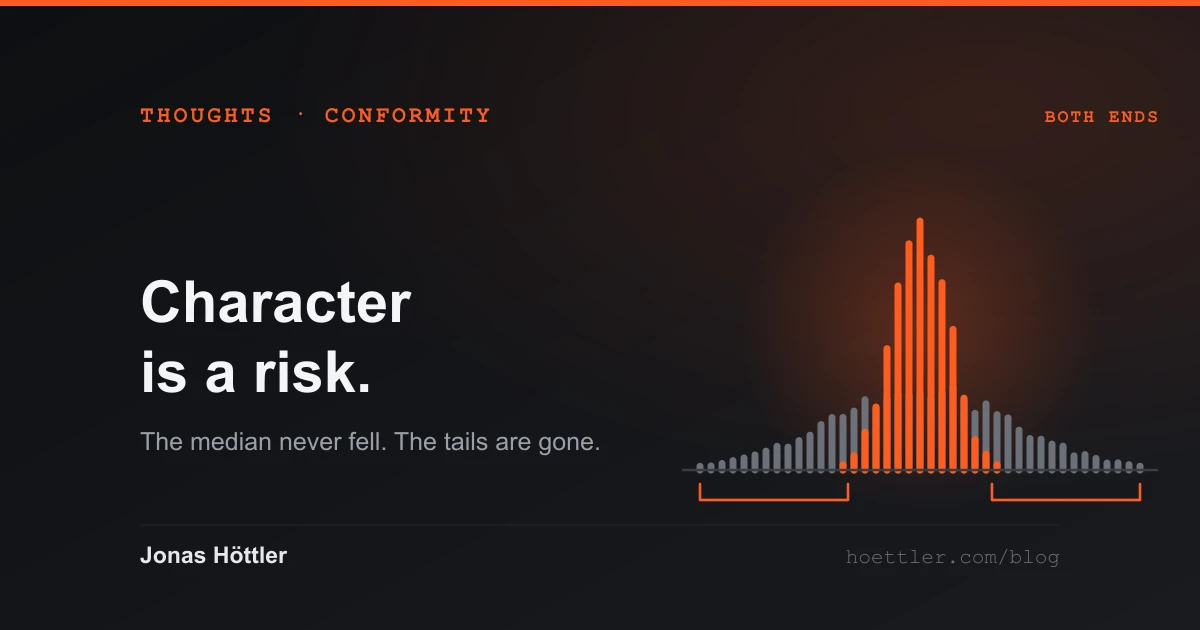
Character Is a Risk, and We Insured It Away
Politics and boardrooms are full of people who sound like they came off the same production line. The comfortable explanation is that people got more cowardly. The real one is colder. The median never fell. The tails were cut off, by twelve reasonable gates with a veto each. On conformity, the new Baroque, and why nobody cares about anything that is not directly around them.
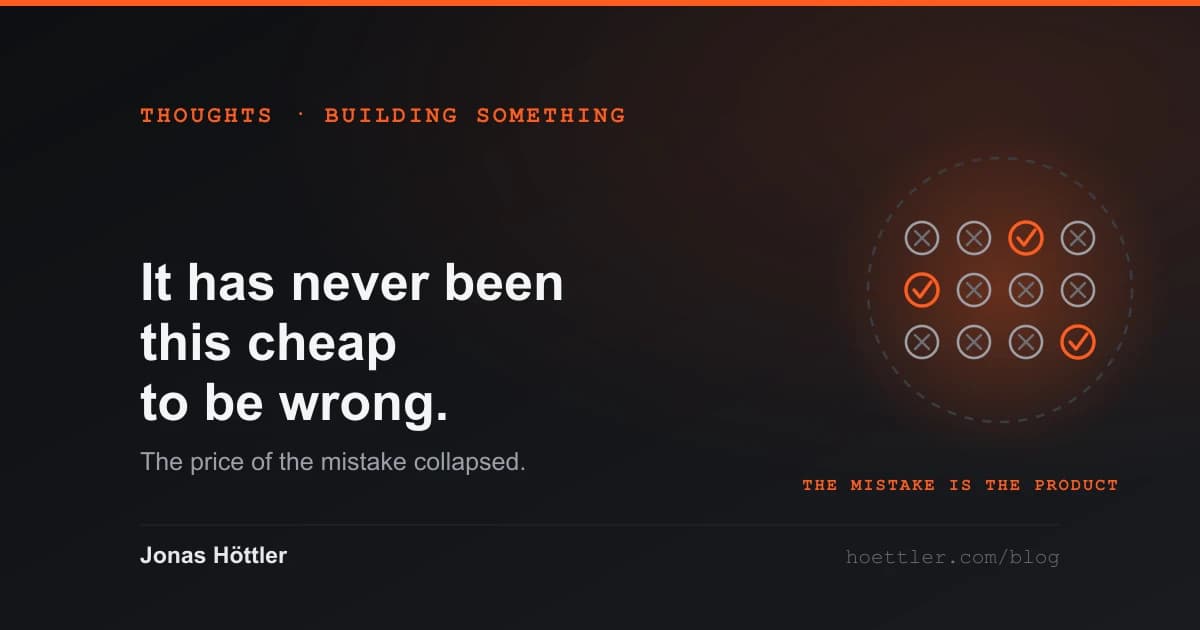
It Has Never Been This Cheap to Be Wrong
Everyone talks about how cheap building has become. That is the boring half. The interesting half: being wrong costs almost nothing now. Why this is the best time to build something of your own, why responsibility feels lighter than expected, and why one recommendation beats a year of posting.
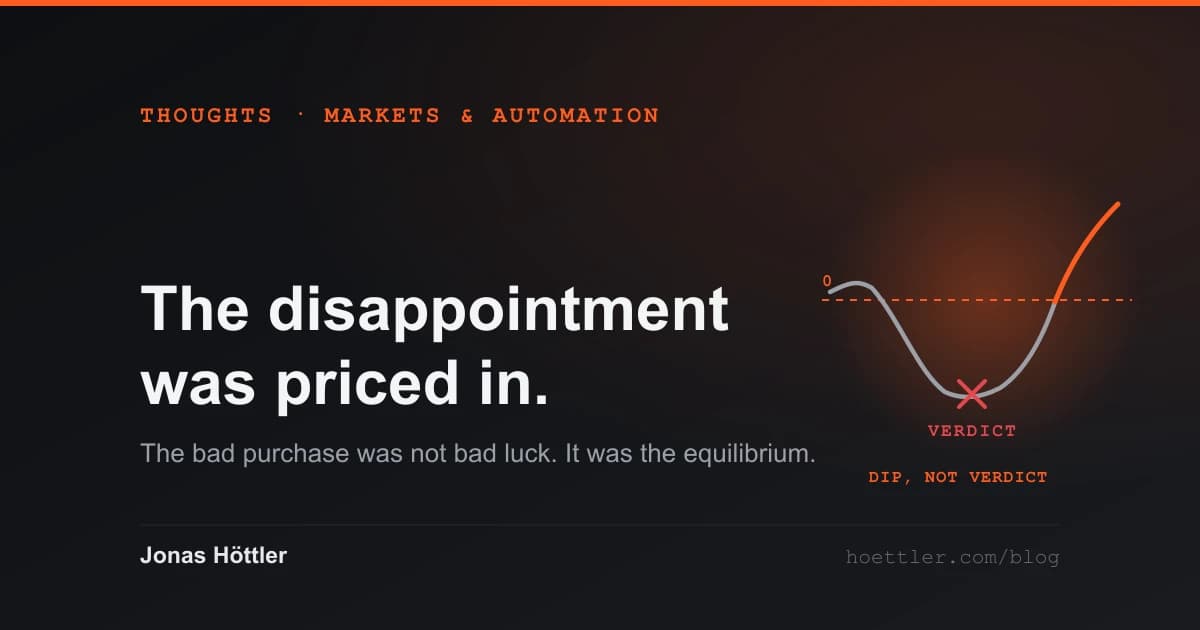
The Disappointment Was Priced In
Thousands of companies bought expensive workflows that fell over after nine months. Now they say the technology does not deliver. Both were predictable, and both say more about the market of 2024 than about those companies. Why the frustration is not a result but a date.
The Sun Is a Blank Page, and Plato Was Still Right
We never see the thing, only its shadow. Models, data, renderings. Plato's cave says: get out, climb to the sun. But the ascent doesn't free you from shadows. It gives you a better fire. Knowledge isn't leaving the cave. Knowledge is casting sharper, repeatable shadows. And the thing with no shadow at all, the sun itself? A blank page.
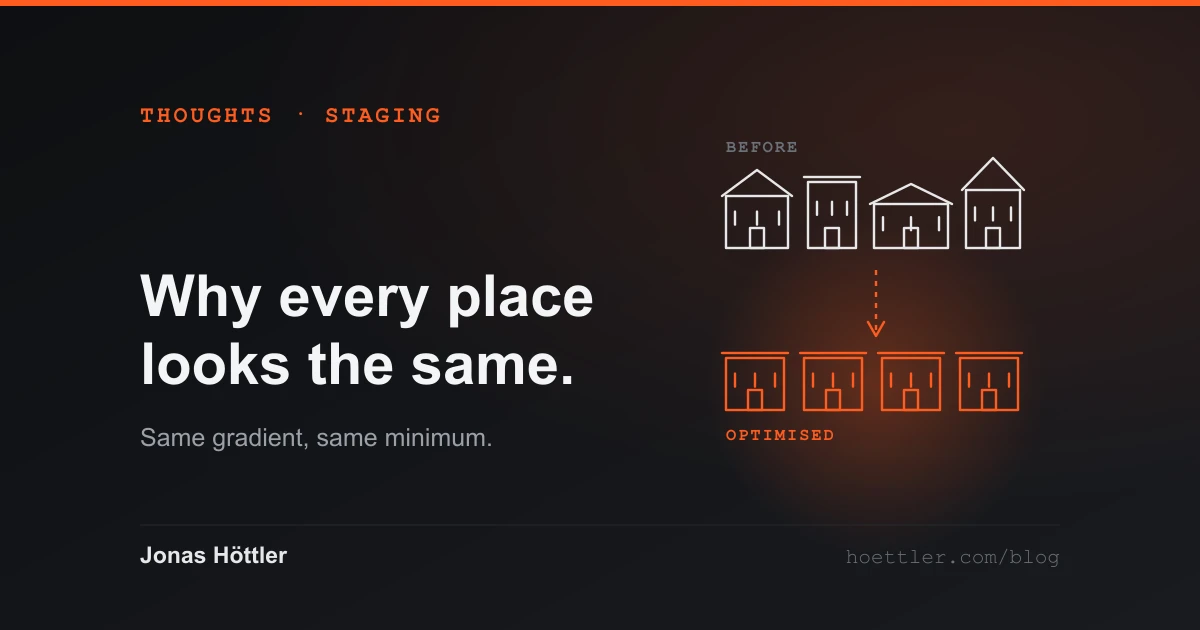
Why Every Place Looks the Same, and Why That's Not a Design Failure
White, light oak, rounded corners, a plant. The Apple Store, the coworking space, the dentist, your landing page. The obvious explanation, that designers got lazy, is wrong. The real one is worse: optimisation is a beauty machine. It just can't see what it can't measure.
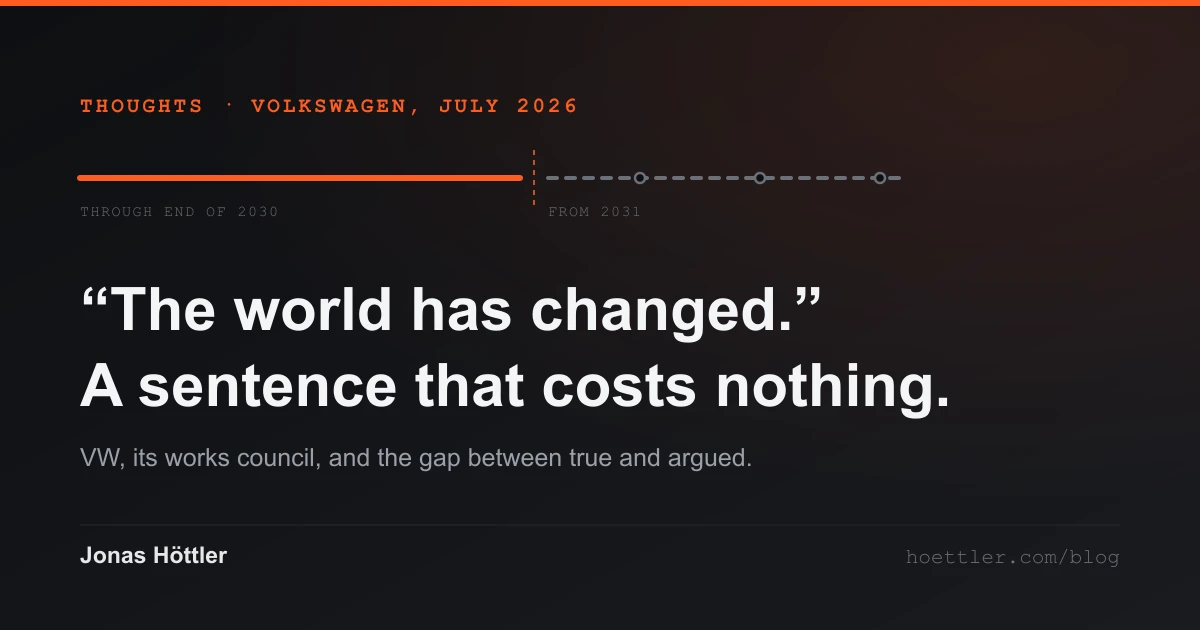
“The World Has Changed” Is Not a Diagnosis. It's a Negotiating Move.
VW is halving its model range, and the works council speaks of disrespect. The convenient reading is that someone here refuses to accept that the world changes. It is wrong. And wrong in a way that reveals more about us than about Wolfsburg.
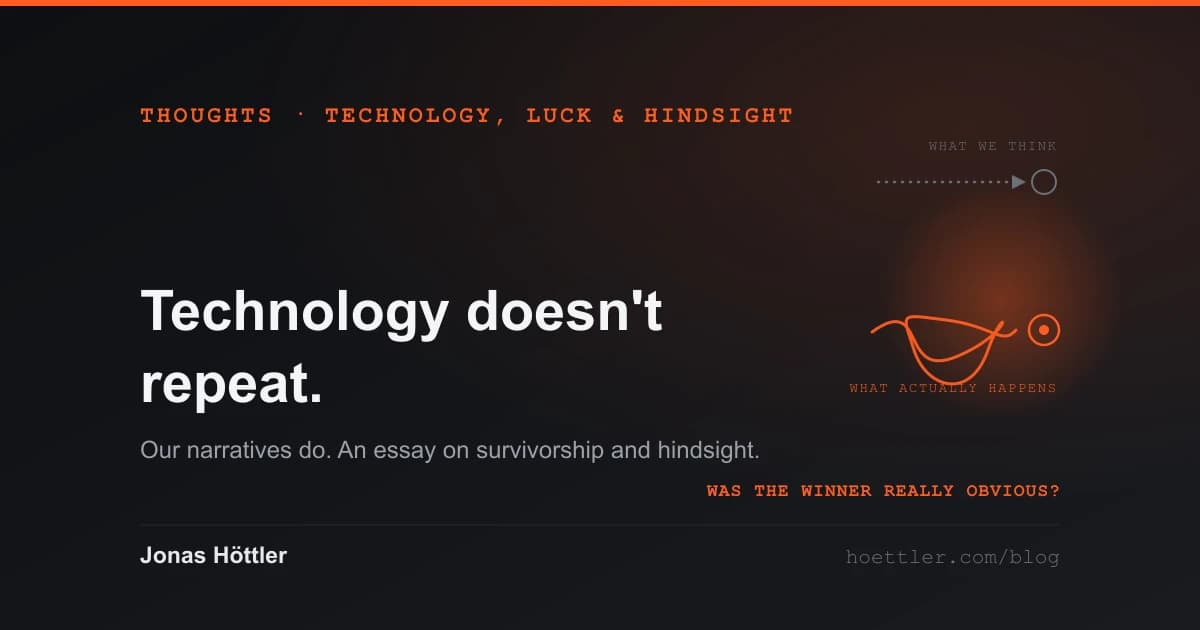
Technology Doesn't Repeat. Our Narratives Do.
Every technological revolution convinces us that this time, at last, we understand why winners win. We almost never notice that the explanation arrives after the winner does.
Germany Loses to Paraguay. Our Brain Wins a Story.
A missed penalty becomes the diagnosis of an entire country within minutes. The fascinating part isn't whether the diagnosis is right — it's how effortlessly our mind builds a closed explanation of the world from a single event. On the difference between a good story and a good explanation.
Why We Tell Ourselves Stories: What Managers, AI and the Human Mind Have in Common
A CEO, a language model and your morning coffee all explain their choices fluently — and in all three cases the explanation may quietly miss how the decision was actually made.
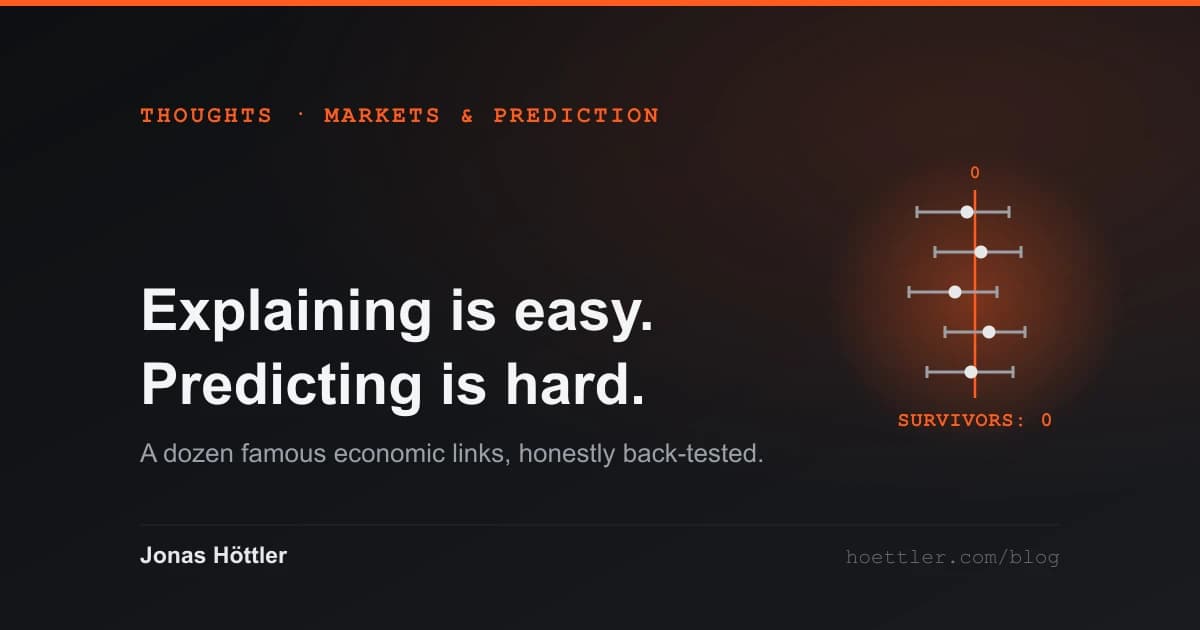
Explaining Is Easy, Predicting Is Hard: I Back-Tested the Famous Economic Links
Experts explain every market move in hindsight, flawlessly — and still don't call the next one. I honestly back-tested more than a dozen famous economic relationships out-of-sample. Almost none survive.
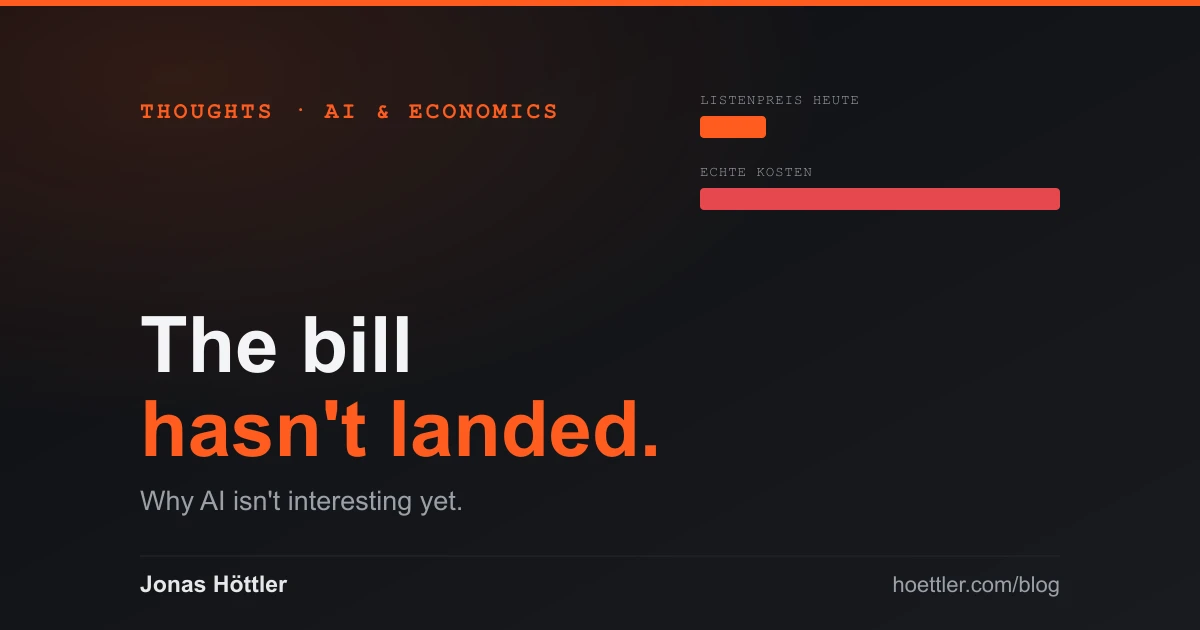
Why AI Isn't Interesting Yet — The Bill Hasn't Landed
An opinion: we're judging AI at demo prices, not real prices. Until the cost reaches the customer, we can't see which applications actually hold up.